
Matt M. Myftiu
Matt Myftiu has been a journalist for two decades with a focus on technology, NASCAR and autos.
2026 Hyundai Tucson plug-in hybrid offers sharp looks, strong fuel economy
As automakers continue to stake their claims in the area between gas-only vehicles and full EVs, plug-in hybrids continue to play a role in filling the needs of drivers who don’t want to completely skip the gas station, but do want to limit how often they need to go there.
One company in the plug-in market is Hyundai, which offers multiple versions of its popular Tucson SUV — gas, hybrid and plug-in hybrid (PHEV).
I recently tested a 2026 Hyundai Tucson PHEV Limited model, and I’m back with a full report on how this vehicle competes in its segment vs. rival plug-ins from Toyota, Kia, Mitsubishi, and others.
2026 Mazda CX-50: 5 Things To Know
In the crowded field of compact SUVs, where the list of options is seemingly endless, one brand that continues to deliver strong offerings is Mazda, which offers its longtime best-seller the CX-5, as well as its newer, more rugged CX-50 offering.
I recently spent some time behind the wheel of a 2026 Mazda CX-50, and here are 5 things you should know before you decide whether this is a vehicle that belongs in your driveway.
1. Full of safety features
Safety is a top concern for all car buyers, especially those with families, and Mazda delivers all the major systems that the public has come to expect.
These include LATCH child safety seat anchors for those with small children, automatic emergency braking, a Tire Pressure Monitoring System, Lane Keep Assist and Lane Departure Warning, Rear Cross Traffic Alert, Blind Spot Monitoring, Traffic Sign Recognition and more.
A Driver Attention Alert tracks for drivers who are not being attentive to the road and warns that you might need a brake. And of course there’s a full array of air bags included. You can also opt for helpful 360-degree cameras.
Collectively, drivers of the CX-50 can be confident that the vehicle is doing everything it can to keep them safe and prevent accidents.
2026 Volvo XC90 is a stout, family-friendly and quietly luxurious 3-row SUV
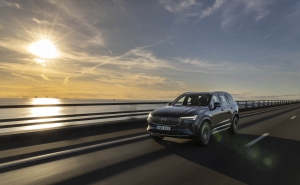
Sometimes less can be more. Take the case of Volvo, for example.
While the luxury automaker’s overall size as a car brand and total annual sales may be less than BMW, Mercedes-Benz, Audi, Lexus and other competitors, it consistently takes home awards (including honors in the recent 2026 Parents Best Family Car Awards), and for many families a Volvo is the only choice they will accept.
After driving the 2026 Volvo XC90, an impressive three-row SUV, I’m not surprised at this level of dedication. Between its strong design and family-friendly features, plus improved tech and Volvo’s traditional safety prowess, the brand has plenty to offer that would inspire such devotion.
Other offerings in this segment (including Audi Q7, Mercedes-Benz GLE, BMW X5, Lexus TX, Acura MDX, Lincoln Aviator and Genesis GV80) may be flashier at times, but Volvo ignores that type of hype and focuses on what counts most — making a vehicle that people will love and appreciate.
Read on for a full review of how the XC90 — which got a major design refresh in 2025 and mostly carries over for 2026, holds up against this stiff competition.
No conspiracy here: Denny Hamlin is just dominating his Cup Series competition

If you’re a regular visitor to the NASCAR corner of the social media world, there is a common theme you may be hearing in 2026 — that NASCAR is cooking the books for the Toyota camp, and Denny Hamlin in particular, to become champions this year.
And while I can understand a little bit why that thought springs to mind for some people — as Toyota have won 10 of the first 16 races between Tyler Reddick (5), Hamlin (4) and Ty Gibbs (1); and even lesser Toyota teams like Legacy Motor Club are starting to show speed and run up front — the reality is far more boring that the conspiracy would have you believe.
Hamlin is just that good this year. As he’s said in the past, he’s beating your favorite driver, week in and week out, and achieving new career milestones week after week. He recent entered the ultra-rare 50 win/50 pole club, and has now passed the late Kyle Busch with his 64th career win (and sits 12 wins behind 8th-place Dale Earnhardt).
To be doing this at age 45 is nothing short of incredible in a sport where youth often prevails.
ARaymond Unveils Selfy XS Ultra-compact Quick Connector for Next-Generation EV Battery Systems
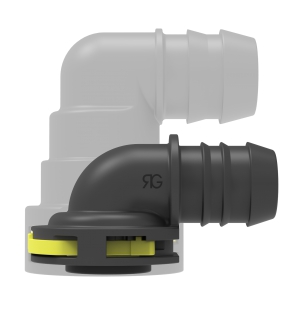
ARaymond, a global leader in fastening, assembly and fluid connection systems, announced the launch of the Selfy XS — an ultra-compact quick connector engineered specifically for the evolving demands of high‑density thermal management applications, including electric vehicle (EV) battery systems.
Designed for environments where space is at a premium, the Selfy® XS introduces a new standard in compact fluid connection technology. With an ultra-short profile, approximately 40% smaller than conventional industry connectors, the solution enables manufacturers to optimize system layout, reduce weight, and improve overall efficiency across mobility and industrial thermal management architectures.
“Battery systems and thermal management systems are becoming increasingly compact and complex, as manufacturers strive to deliver higher performance, efficiency and reliability,” said Sébastien Frasse-Sombet, Senior Global Product Manager for ARaymond. “With Selfy XS, we’ve created a connector that fits where others cannot, without compromising performance, safety or reliability.”
Enabling Smarter Battery Design
The Selfy XS is particularly well‑suited for compact liquid cooling applications where multiple connectors must operate within extremely tight packaging constraints. This includes battery thermal management systems, as well as other mobility and industrial applications using dense cooling circuits.
By reducing connector size and weight, the solution helps OEMs and system integrators:
— Maximize available space for active components, including additional battery cells
— Reduce overall system weight, contributing to improved thermal management efficiency
— Enhance design flexibility in complex architectures
Despite its reduced footprint, the Selfy XS maintains ARaymond’s proven Selfy assembly confirmation technology, ensuring secure and reliable connections. Key safety and usability features include:
— Clear, three-point visual confirmation of proper assembly
— Low insertion force to reduce operator fatigue
— Tool-enabled disassembly without damaging components
— Optional data matrix coding for traceability and quality assurance
“These systems can include dozens of connections within a single battery pack,” added Frasse-Sombet. “Ensuring each one is properly secured is critical, not only for performance, but for safety and traceability.”
Optimized Performance in Tight Spaces
Engineered using advanced injection design techniques, the Selfy XS delivers strong flow performance and low pressure drop, helping maintain efficient cooling loop operation. This contributes to improved thermal regulation, reduced pump load, and support for high‑performance, high‑duty applications, including fast‑charging EVs and other demanding environments.
The connector is available in multiple configurations, including a range of diameters and angles, allowing customization for specific customer requirements and applications.
In line with ARaymond’s sustainability strategy, the Selfy XS is eco-designed to reduce material usage and weight while increasing efficiency. Alternative materials, including recycled options are also available to support lower environmental impact.
Live at The Battery Show Europe
ARaymond will showcase the Selfy XS at The Battery Show Europe, taking place June 9–11 in Stuttgart, Germany. Attendees can experience live demonstrations and speak with product experts at the ARaymond booth (Booth 1-G60).
2026 Mazda CX-90 features high-class design, strong drive; offers plug-in hybrid option
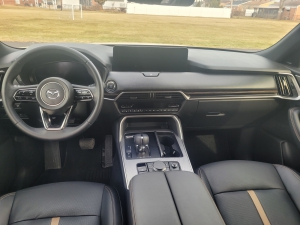
As families grow, so does the need for a larger vehicle.
And like most automakers, Mazda’s lineup includes a three-row SUV that caters to SUV buyers who need up to 8 seats for their growing families.
That offering would be the CX-90, which I recently tested in both a standard gas version, and a plug-in hybrid option (one of few PHEV options in this size of vehicle).
Mazda is unique in the auto world, as they aren’t quite a luxury brand, but their offerings are of a quality that stands above most of the competition in the “non-luxury” tier. Call it luxury-light or whatever you will, but Mazda typically has two calling cards for its lineup of vehicles
— A classy/upscale design
— A strong driving experience
The CX-90 can be cross-shopped with three-row SUVs from nonluxury brands like Toyota, Kia and Honda; while its top trim levels also have some ability to compete with luxury brands like Acura and Volvo.
Read on for a full review to see if that reputation holds up on the 2026 CX-90 lineup (which carries over from the 2025 offering without significant updates).
2026 Volvo XC40 is a classy little SUV with a smooth ride
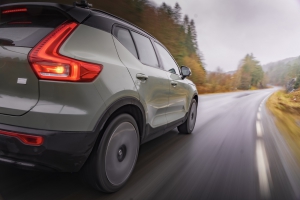
Entering the realm of the luxury automobile may seem like a tall task for car buyers, but with brands like Volvo, it’s easier than you may imagine.
Take their subcompact SUV offering, the XC40, for example. Starting around the low $40K price range, it provides a foot in the door for people looking to step up on the class scale — as long as they’re good with limited space in the rear seats and in the cargo hold.
Volvo’s larger XC60 and XC90 SUVs are more spacious, but if you’re less concerned with the amount of space but still want the Volvo quality design, drive quality and safety features, the XC40 is a strong option to consider — and it competes well against other smaller SUV options in the class — including the Audi Q3, BMW X1 and Mercedes-Benz GLB, Acura ADX and Lincoln Corsair.
Read on for a full review on the 2026 Volvo XC40, which I recently had the opportunity to experience, to learn more about how it holds up vs. its rivals.
2026 Volvo XC60 plug-in hybrid is eco-friendly, fast and luxurious
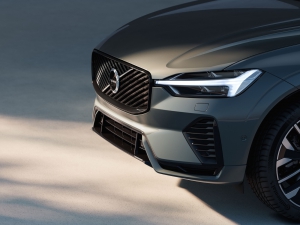
As they seek to court luxury buyers with eco-friendly leanings, upscale automakers are covering the gamut in terms of electric vehicle offerings.
This means offering not just pure EVs, but also plug-in hybrids for buyers not quite ready to make the leap to fully electric.
One such brand is Sweden’s Volvo, which offers a PHEV (plug-in hybrid) version of its 2026 Volvo XC60 midsize SUV, which offers a total of 35 miles in pure electric driving before the gas engine kicks in.
The luxury plug-in hybrid market is packed with competitors, including offerings from Mercedes-Benz, Lexus, Audi and BMW.
I recently spent some time behind the wheel of the 2026 Volvo XC60 T8 AWD plug-in hybrid (Ultra trim level), and I’m back with a full report on how it holds up in this growing luxury sector. Read on to learn more about the XC60 PHEV and how it stacks up.
2026 Hyundai Ioniq 9 delivers futuristic look, strong performance and range in a three-row EV
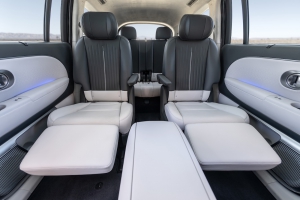
As the debate over the future of EVs continues, some companies are going big with their electric plans.
And in this case, I mean it literally, as Hyundai has debuted the 2026 Ioniq 9, a large, three-row, fully electric SUV that has few true rivals in terms of size among the electric landscape — which is dominated by smaller offerings.
This long-awaited offering’s closest competition is from Hyundai’s corporate relative Kia, which offers a similarly sized vehicle called the EV9. Outside of that, the only true competition are upscale offerings like the Rivian R1S, Volvo EX90 and Cadillac Vistiq.
Entering this level of the EV market means there is a commitment to electrification, and time will tell whether the U.S. public follows along and heads in this direction, but in the meantime Hyundai has unveiled a tremendous vehicle offering with a lot for potential buyers to love about it.
I recently spent some time with an Ioniq 9, which featured power, range and an attractive and family-friendly design. Read on for a full review of this bold new offering from Hyundai.
2026 Mazda CX-30 is a super sporty subcompact SUV
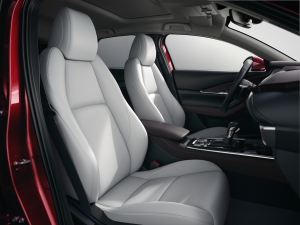
In the world of SUVs, the bigger alternatives that can pack in a large family get much of the headlines, but lurking in the background are some strong options for folks with a need for less space.
The subcompact SUV category is one that has a wide variety of options — from the Chevy Trax to Volkswagen Taos, Hyundai Kona, Kia Seltos and Buick Envista — but the one that stands about all others in the category is the Mazda CX-30.
I recently tested the 2026 Mazda CX-30 (a Turbo Premium Plus model), and it left a very strong impression with its powerful drive quality and upscale interior. Many people associate smaller vehicles with low power, but that’s far from the case with the CX-30.
Read on for a full review of the CX-30, which carries over mostly unchanged from the 2025 model.
News Categories

Popular Tags
Search Reviews by Make

AutoTechReviews is your home for In-depth reviews of the latest cars, trucks, and SUVs; information on all the emerging vehicle technology; and breaking news from the world of NASCAR and other motorsports.